The International Brotherhood of Teamsters Local 696 (IBT Local 696)
The Teamsters Local 696 is a labor organization located in Topeka, Kansas
The union president is usually the individual who leads negotiations on behalf of the union. The President of the Teamsters Local 696 is Mike Scribner. Union members do not get to vote on who leads negotiations.
IBT Local 696 LM2 Report 2025
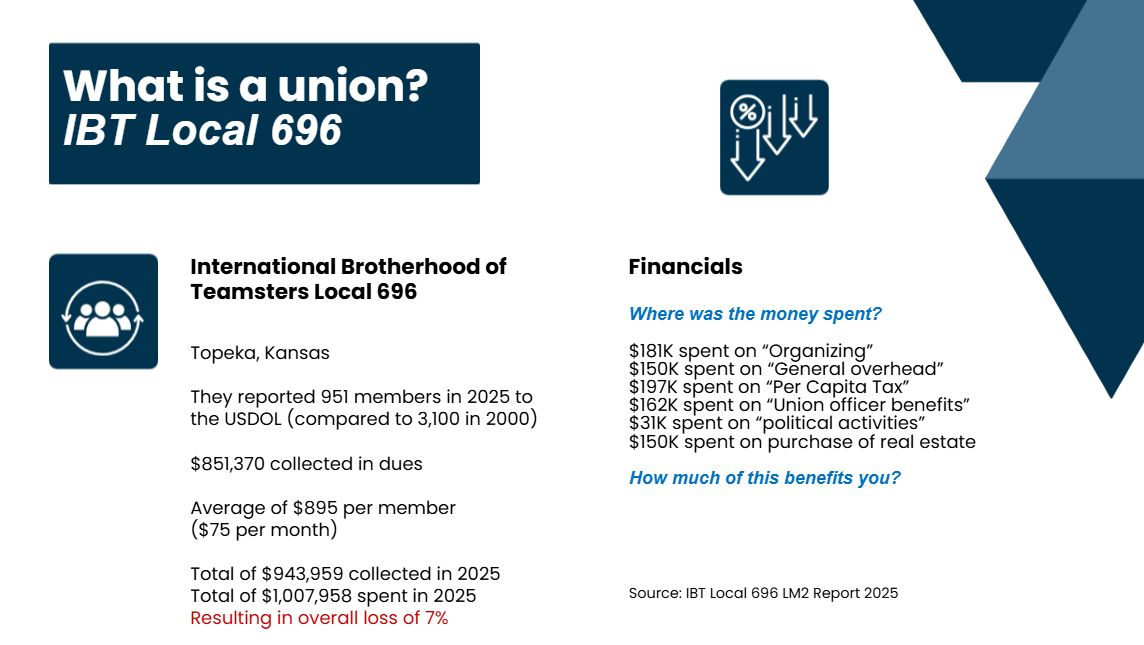
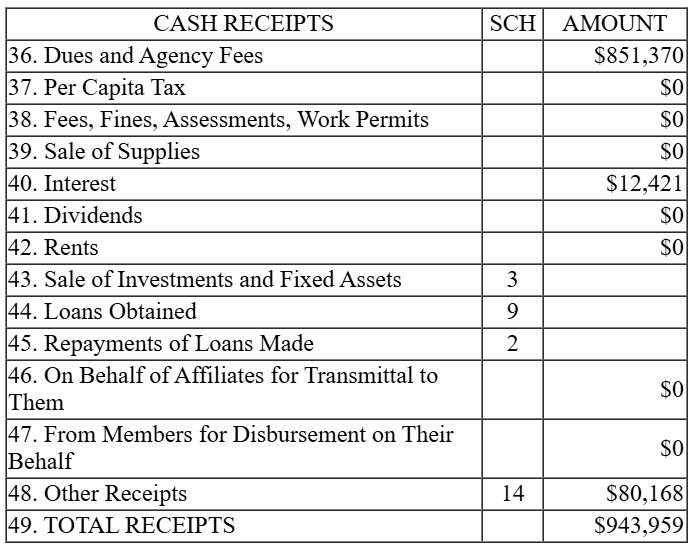
Every year unions are required to file financial reports with the U.S. Department of Labor. These reports show all the money a union collected in a particular year, including the source of the income. Reports also show where The IBT Local 696 spent the money it collected.
Where does IBT Local 696 spend its money?
Found on the IBT Local 696 LM2, Fiscal Year 2025 Report: STATEMENT B - RECEIPTS AND DISBURSEMENTS
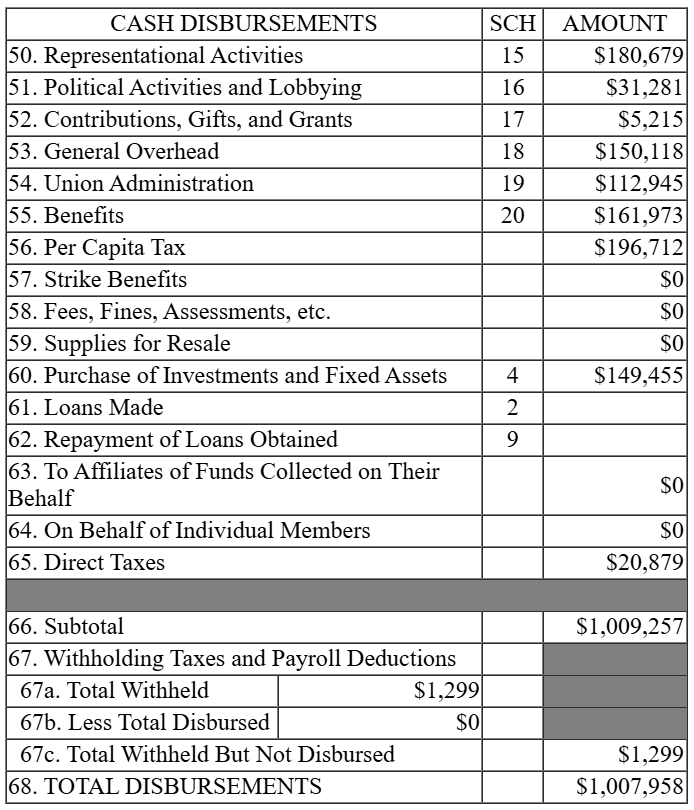
$180,679 Representational Activities – Money spent attempting to organize non-union workers
$196,712 Per Capita Tax- A tax paid on behalf of every member of Local 5 to the International Shoreman and Warehouse Union
$150,118 General Overhead - There is no specific definition of this term. It could include various general costs of operating the union and maintaining its physical assets
$112,945 Union Administration - Money spent on internal affairs
$31,281 Politcal Activities and Lobbying
$0 Individual Members- Money that the local disburses to its members
International Brotherhood of Teamsters Constitution
All unions, including IBT, have an International Constitution that contains the rights and powers of union officials, as well as rules and obligations all members must follow. According to the IBT Constitution:
Membership Obligations / Pledge: Individuals who become members of the IBT are required to accept and comply with the Constitution and the bylaws of their local union. These documents govern member conduct, rights, and responsibilities within the organization (see Article II – Membership).
Adherence to Union Rules: Members are expected to comply with union rules, decisions, and policies established by the union’s governing bodies. These rules may impact how workplace matters are addressed collectively rather than individually (see Article II).
Disciplinary Action: The IBT Constitution provides for internal disciplinary procedures, including charges, hearings, and penalties such as fines, suspension, or expulsion, for members found to have violated union rules or obligations. These matters are governed by the union’s internal process under Article XIX – Trials and Appeals, which outlines due process requirements and penalties.
Strike Authorization and Participation: The IBT Constitution recognizes the union’s authority to engage in strike activity and other concerted actions as part of collective bargaining. Members may be expected to comply with authorized strike directives, and failure to follow union rules related to such activity may result in internal discipline under Article XIX – Trials and Appeals.
Contract Negotiation and Approval: Collective bargaining agreements are negotiated by union designated bargaining representatives or committees. Proposed agreements are subject to the union’s internal approval and ratification procedures. Once ratified, the agreement applies to all employees in the bargaining unit, regardless of union membership status (consistent with NLRA Section 9(a)).
Dues and Financial Obligations: Members are required to pay regular union dues and other financial obligations in order to remain in good standing. The IBT Constitution permits the collection of dues, initiation fees, and assessments (see Article X – Revenues, Bonding, and Audits).
Political and Legislative Activity: The IBT Constitution identifies involvement in political and legislative activity as one of the union’s objectives. Union resources may be used to support these activities as determined by union leadership, even though individual members may not share the same views (see Article II – Objects).
IBT Local 696 NLRB Representation Election Track Record
How has Local 696 fared in NLRB representation elections in first contract negotiations?
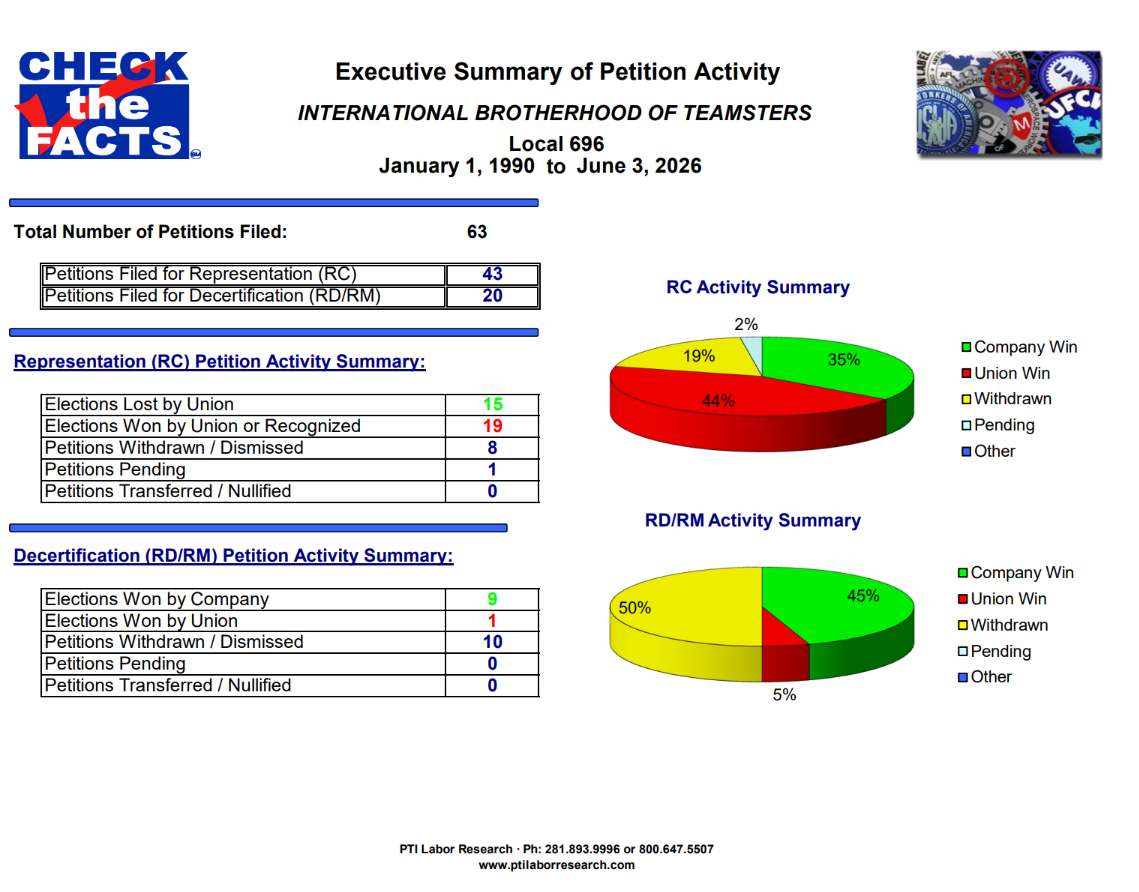
Since January 1990, there have been 43 representation petitions filed with the NLRB.
Out of the 43 representation petitions filed, here are the results:
• Won 19 elections (44%)
• Withdrew 8 prior to the vote (19%)
• Lost 15 elections (35%)
• Pending 1 election (2%) *Bert Nash Center
Unions typically withdraw a petition if they feel they are going to lose an election
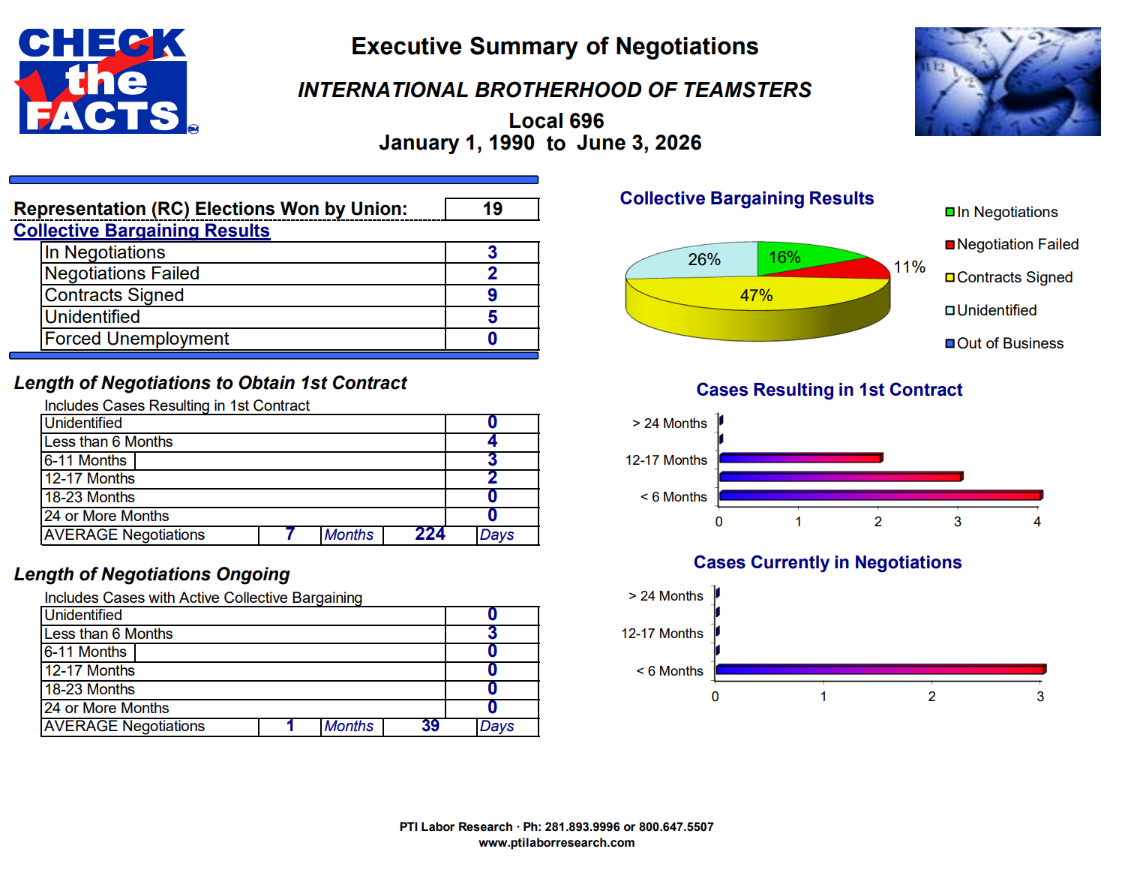
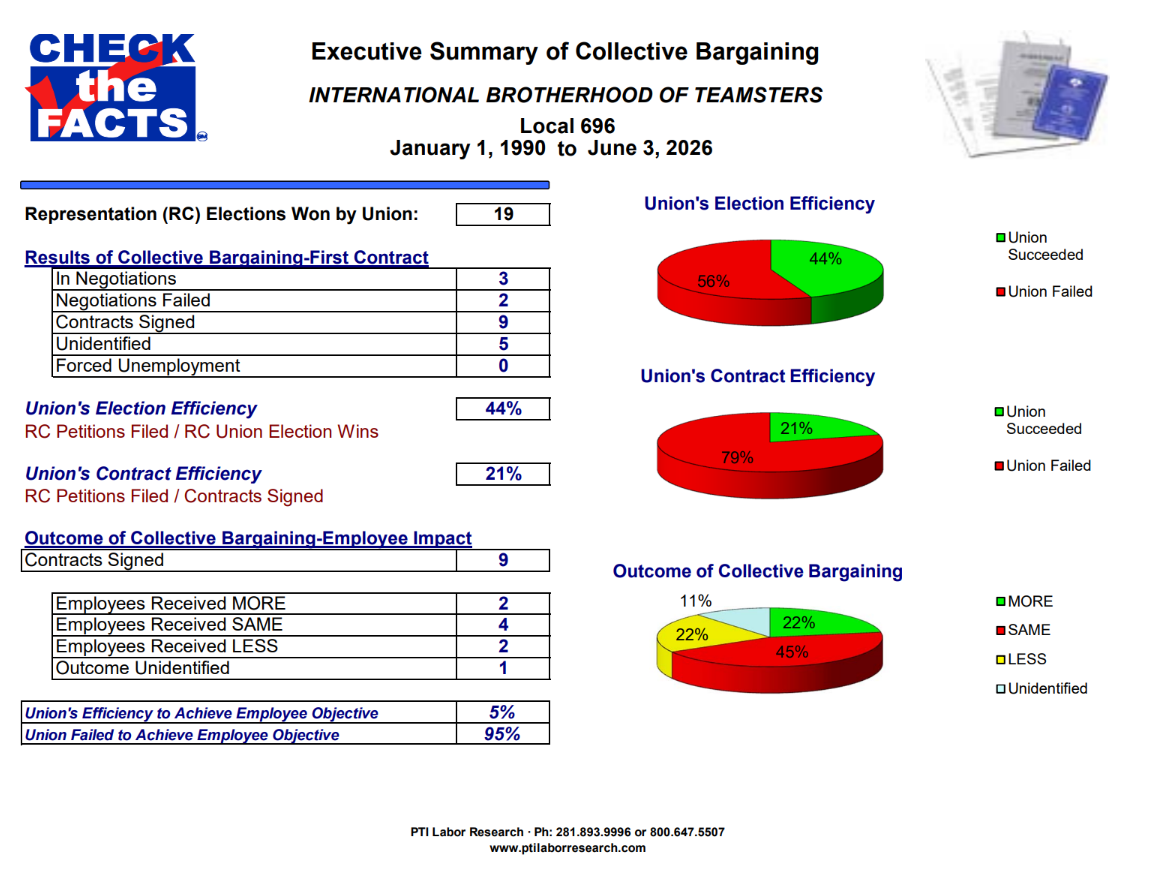
Of those 19 wins, Local 696 was able to reach a contract on 9 occasions
And out of the 9 contracts signed, employees got more in wages and benefits than what they had prior to unionization just 2 times
That is an overall success rate of 5%. Below is information from an independent research firm reflecting these results.